-
 Retatrutide Chemical Structure: Formula, Sequence, and Lipidation
Learn how retatrutide’s 39-residue backbone, noncanonical amino acids, Lys17 lipidation, and receptor assays define separate evidence layers.
-
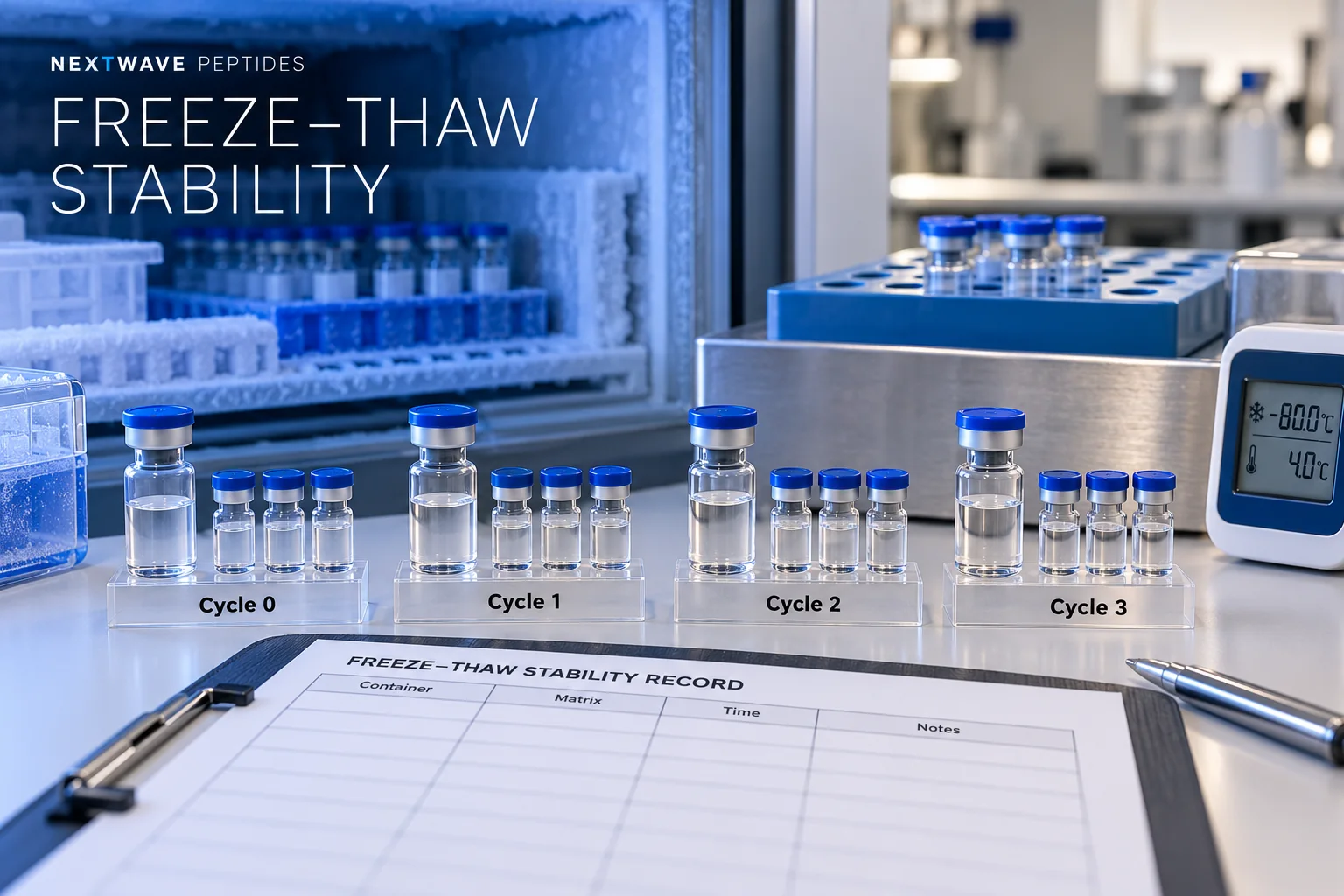
Peptide Freeze–Thaw Stability: Why Cycle Count, Container, and Matrix Must Be Reported
Learn why peptide freeze-thaw stability records must define cycle count, temperatures, matrix, concentration, container, handling, and endpoint.
-
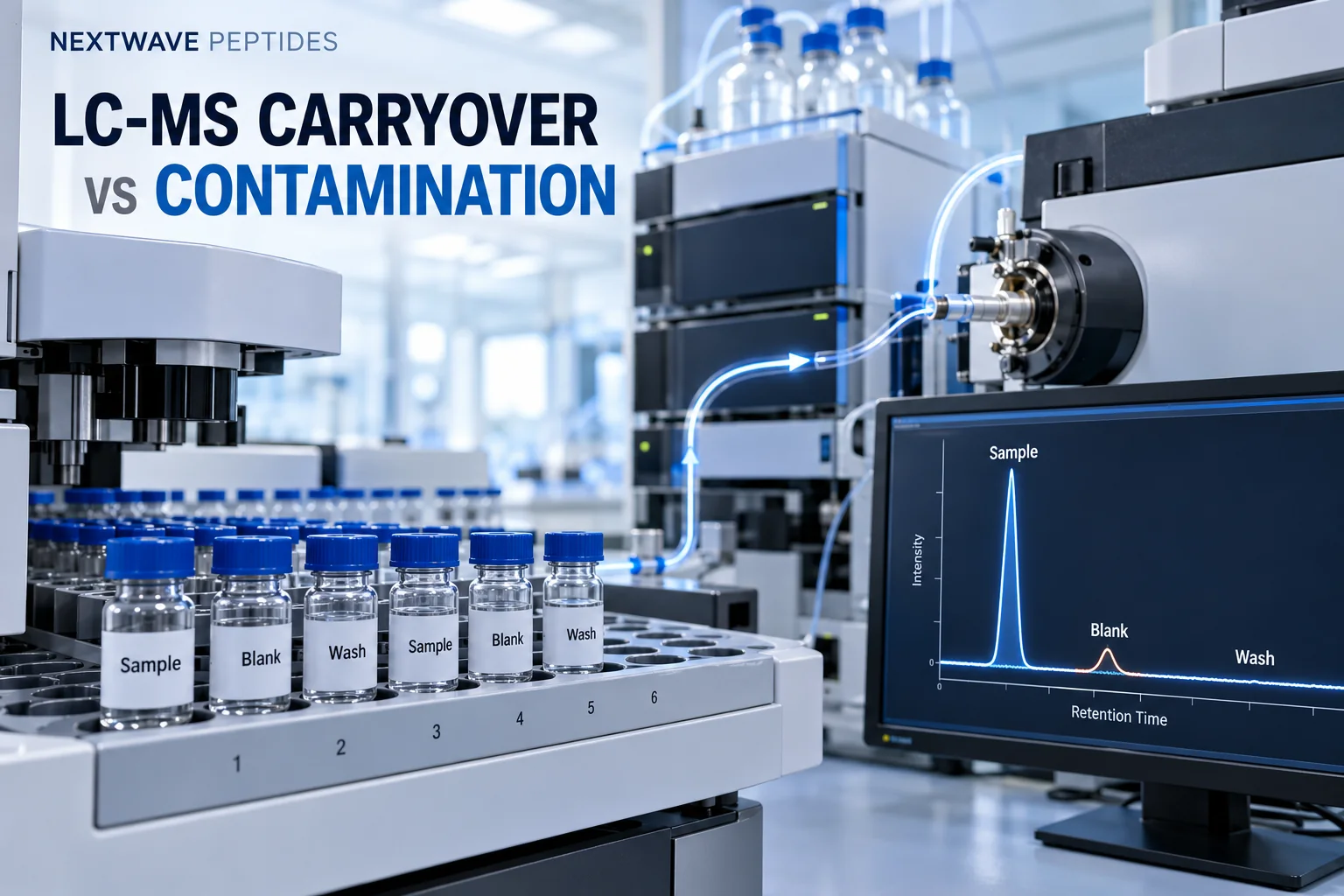
LC-MS Carryover vs Sample Contamination: How Blank and Wash Tests Separate Them
Learn how sequence blanks, preparation blanks, repeated blanks, and wash tests distinguish LC-MS carryover from sample contamination.
-
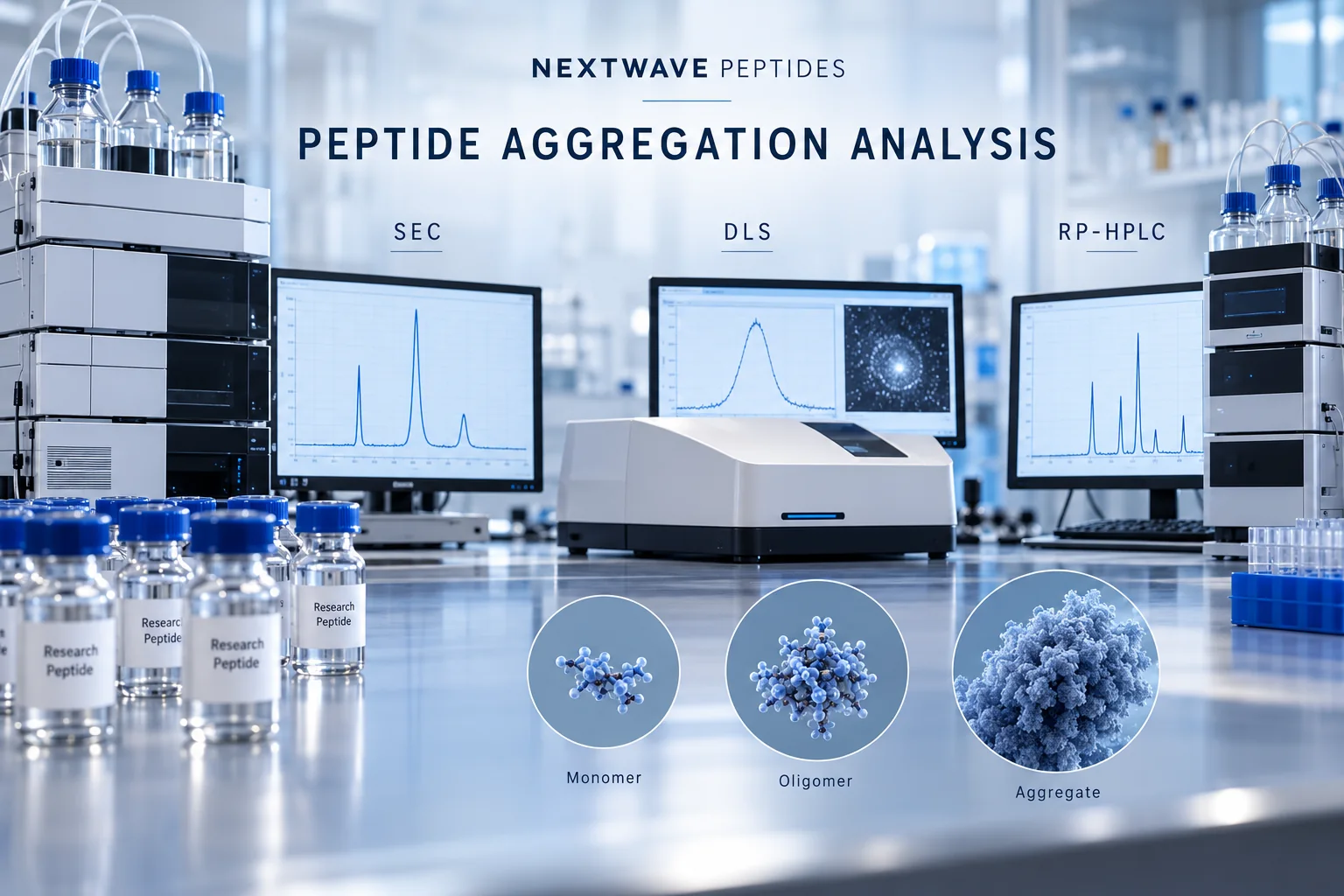
Peptide Aggregation Analysis: Why SEC, DLS, and RP-HPLC Answer Different Questions
Compare SEC, DLS, and RP-HPLC for peptide aggregation analysis, including what each method measures and the blind spots that cause disagreement.
-
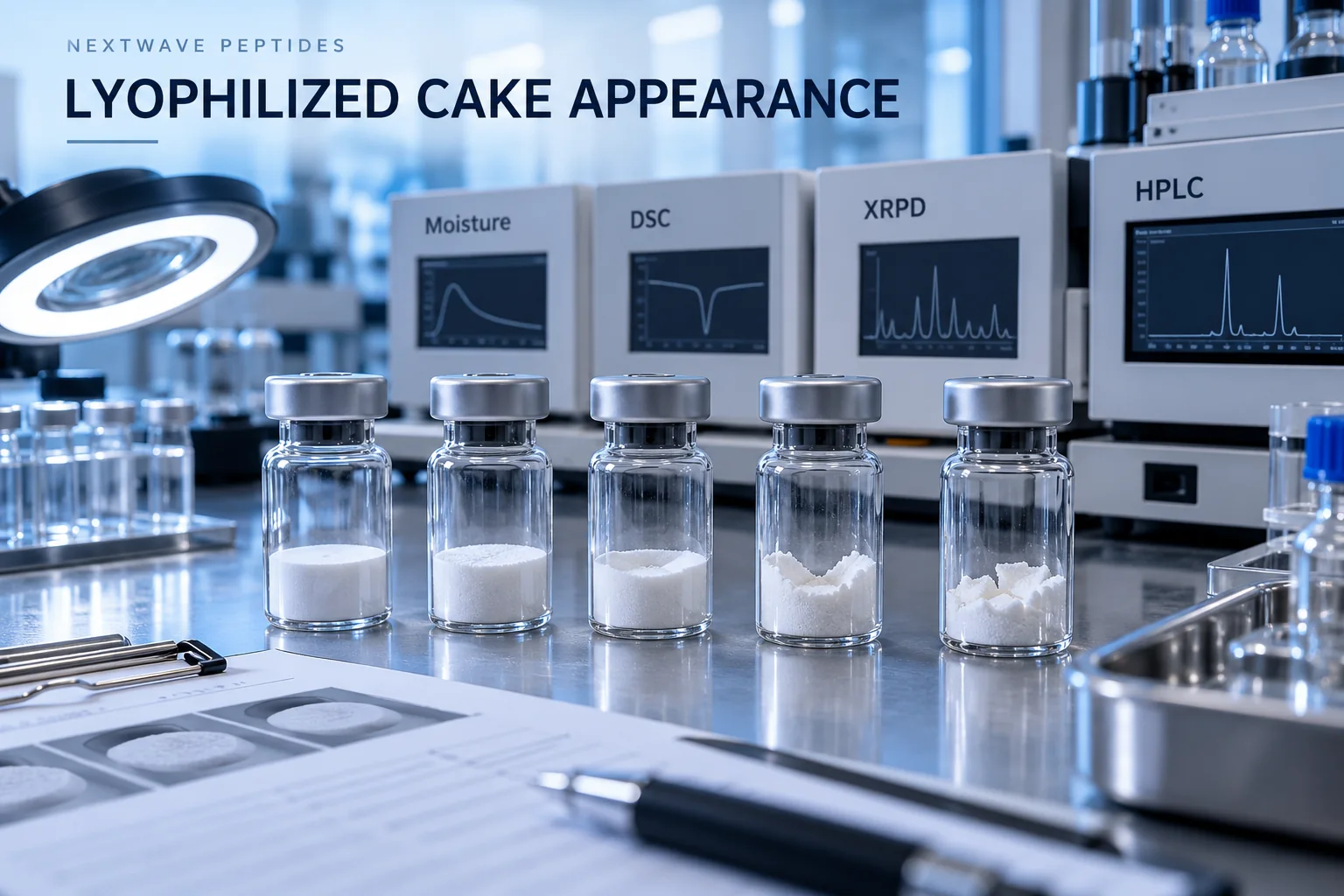
Lyophilized Peptide Cake Appearance: What Collapse, Shrinkage, and Color Can—and Cannot—Show
Learn what collapse, shrinkage, cracking, and color can flag in a lyophilized peptide vial—and which analytical tests are still required.
-
Peptide Deamidation and Isoaspartate: Why the Same Mass Can Hide Different Species
Learn why deamidation can form aspartate or isoaspartate with the same mass and which LC-MS fragmentation evidence distinguishes them.
-
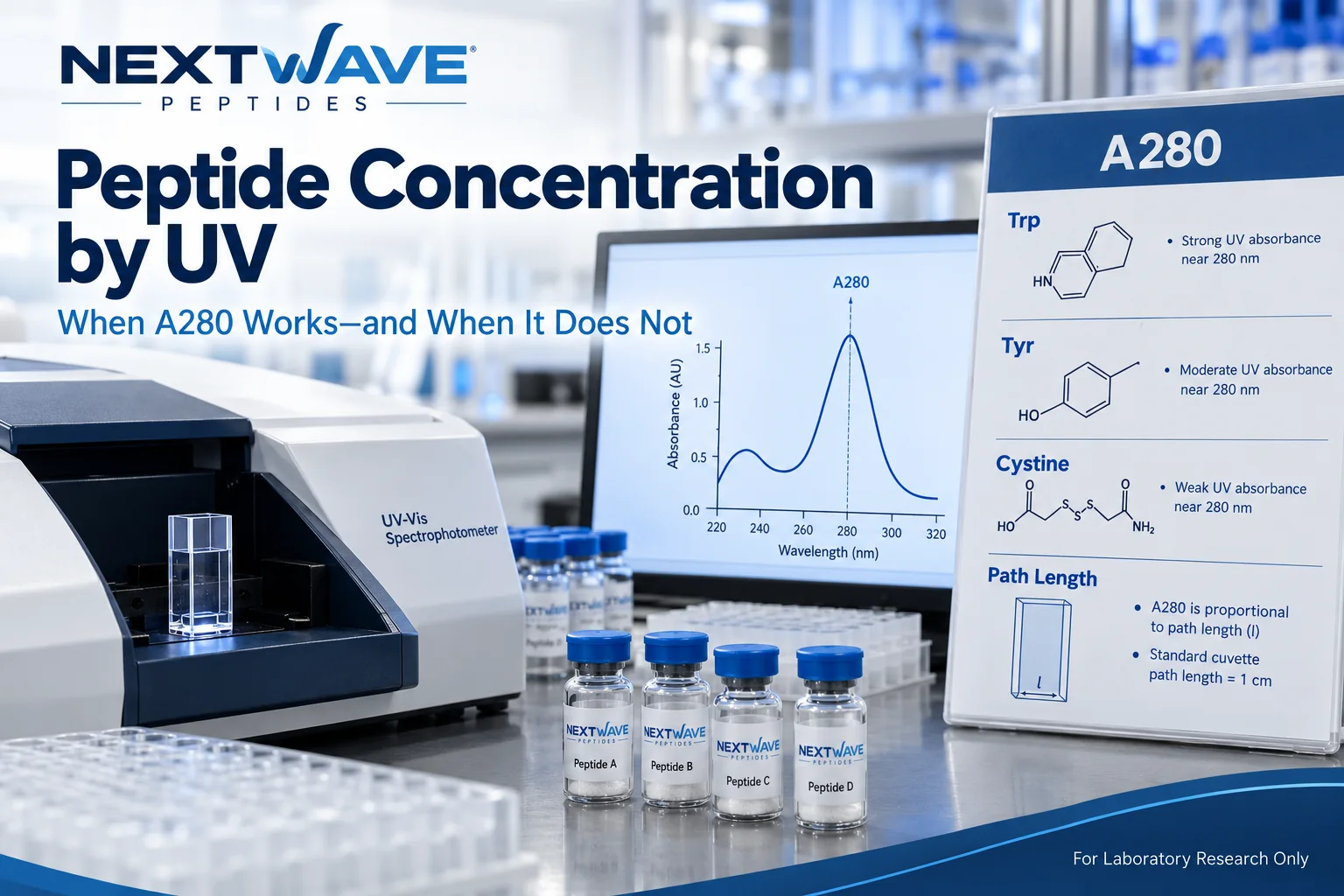
Measuring Peptide Concentration by UV: When A280 Works—and When It Does Not
Learn when peptide concentration can be estimated by A280 and how sequence, extinction coefficient, blank, path length, and scattering affect results.
-
Cagrilintide Modification Mapping: Why Intact Mass Is Only the First Check
Learn why cagrilintide sequence, Cys2–Cys7 disulfide, C-terminal amide, and lipidation site need separate analytical evidence.
-
Oxytocin Disulfide Bond: Why Reduced and Oxidized Forms Need Separate LC-MS Records
Learn how the Cys1–Cys6 disulfide distinguishes oxidized oxytocin from its reduced dithiol form in HPLC and LC-MS records.
-
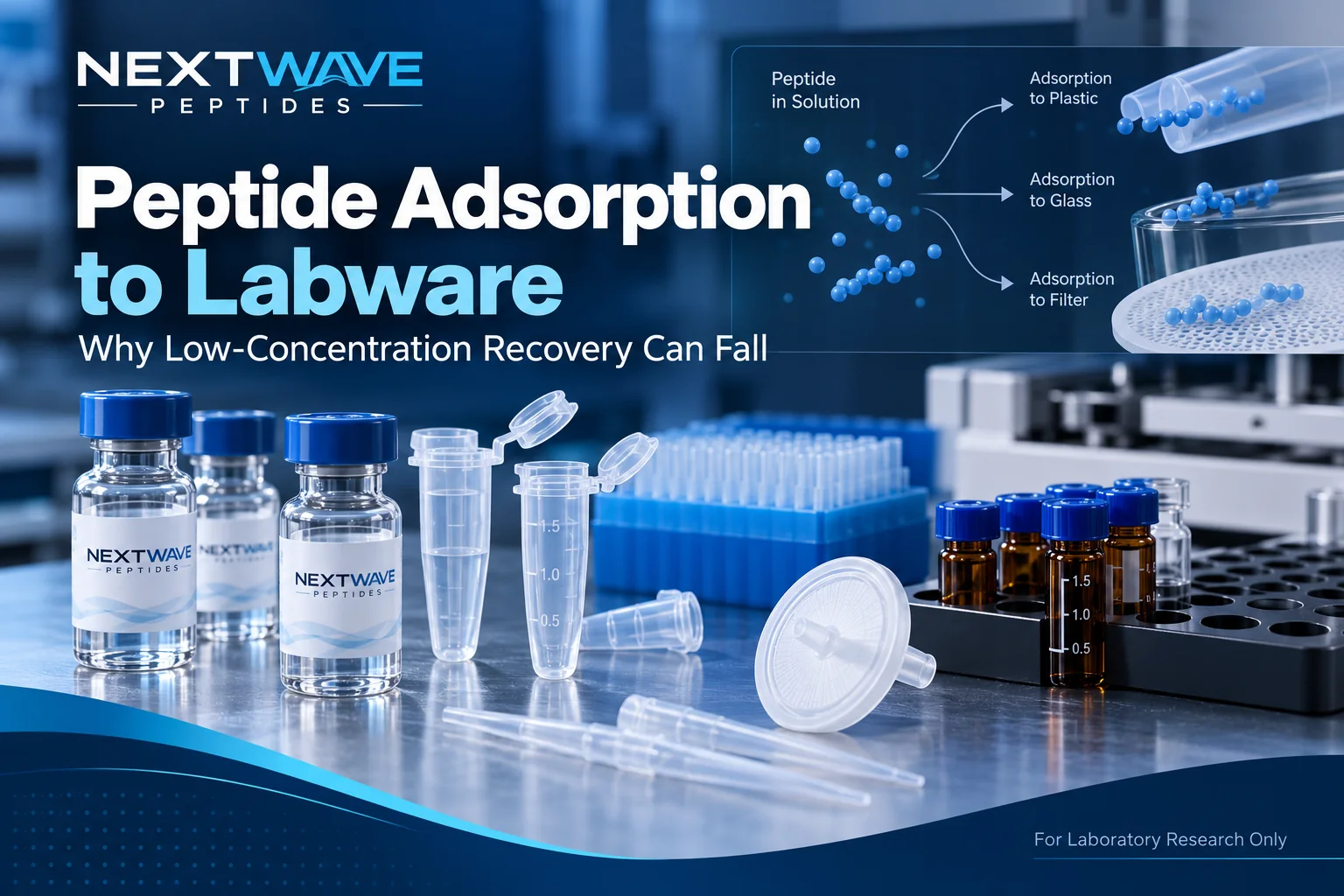
Peptide Adsorption to Labware: Why Low-Concentration Recovery Can Fall
Learn how tubes, tips, filters, vials, concentration, transfers, and sample matrix can change peptide recovery during laboratory analysis.
-
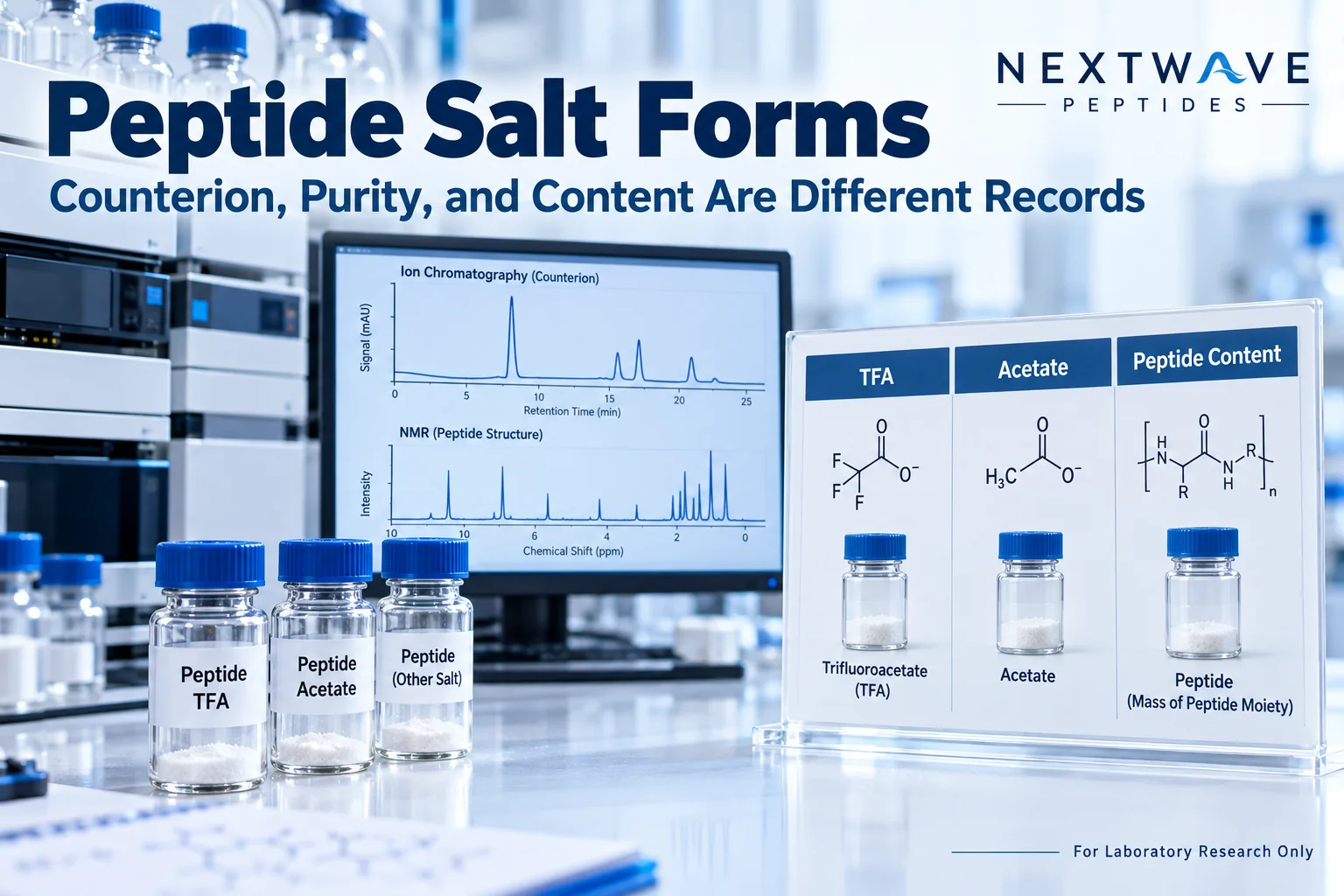
Peptide Salt Forms: Why TFA, Acetate, and Peptide Content Are Separate Records
Learn why peptide counterion, sequence identity, HPLC purity, and quantitative peptide content are separate records that require different evidence.
-
Semax and ACTH Fragments: Why ACTH(4–7)-PGP Is a Distinct Peptide Record
Compare Semax ACTH(4–7)-PGP with ACTH(4–10) by exact sequence, PGP extension, mass, fragments, literature matching, and analytical identity.