-
 GHK-Cu Analysis: Why ICP-MS Alone Cannot Confirm the Copper–Peptide Complex
Learn why an ICP-MS copper signal cannot confirm GHK-Cu identity without separation, peptide-specific analysis, and matched copper and peptide quantitation.
-
Thymosin Beta-4 Sulfoxide: Why Methionine Oxidation Is Not a TB-500 Fragment Result
Learn why methionine oxidation applies to full-length thymosin beta-4 but cannot describe the seven-residue TB-500 fragment Ac-LKKTETQ.
-
Semaglutide Design: Why Aib8 and C18 Acylation Solve Different Problems
Learn why semaglutide uses Aib8 for DPP-4 resistance and a C18 fatty-diacid side chain for albumin association and prolonged exposure.
-
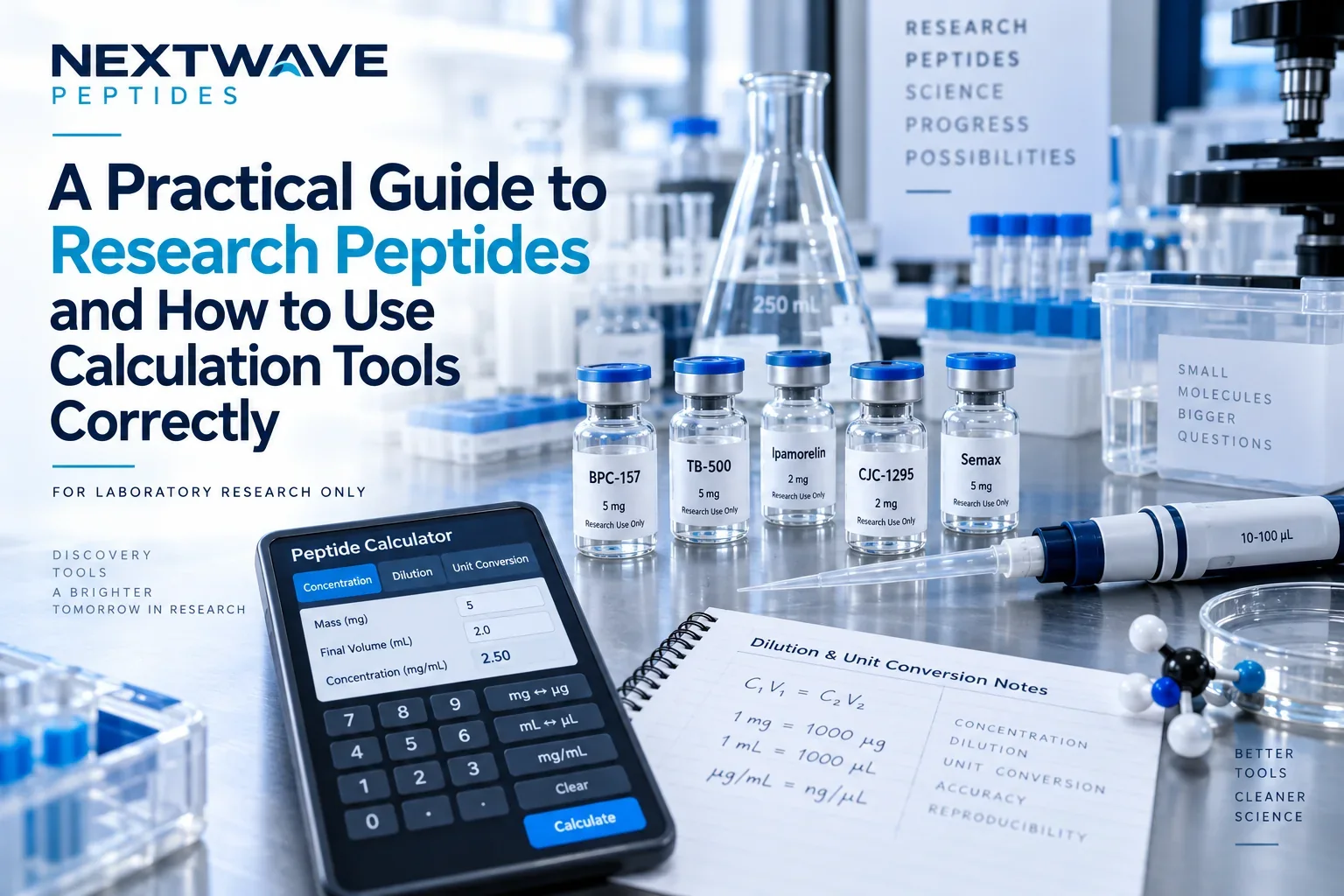
Research Peptide Calculation Tools: How to Use Them Correctly
Use research peptide calculation tools correctly by defining units, concentration basis, dilution assumptions, significant figures, and equipment limits.
-
Melanotan I and Afamelanotide: When Two Names Point to the Same Peptide Sequence
Learn how Melanotan I and afamelanotide naming relates to a 13-residue peptide sequence and why stereochemistry, termini, salt, and formulation still matter.
-
GLOW vs KLOW Blend: Why One Added Peptide Changes the Entire Analytical Record
Compare GLOW and KLOW by component count, identity targets, chromatographic selectivity, mass confirmation, quantitation, ratio, and stability evidence.
-
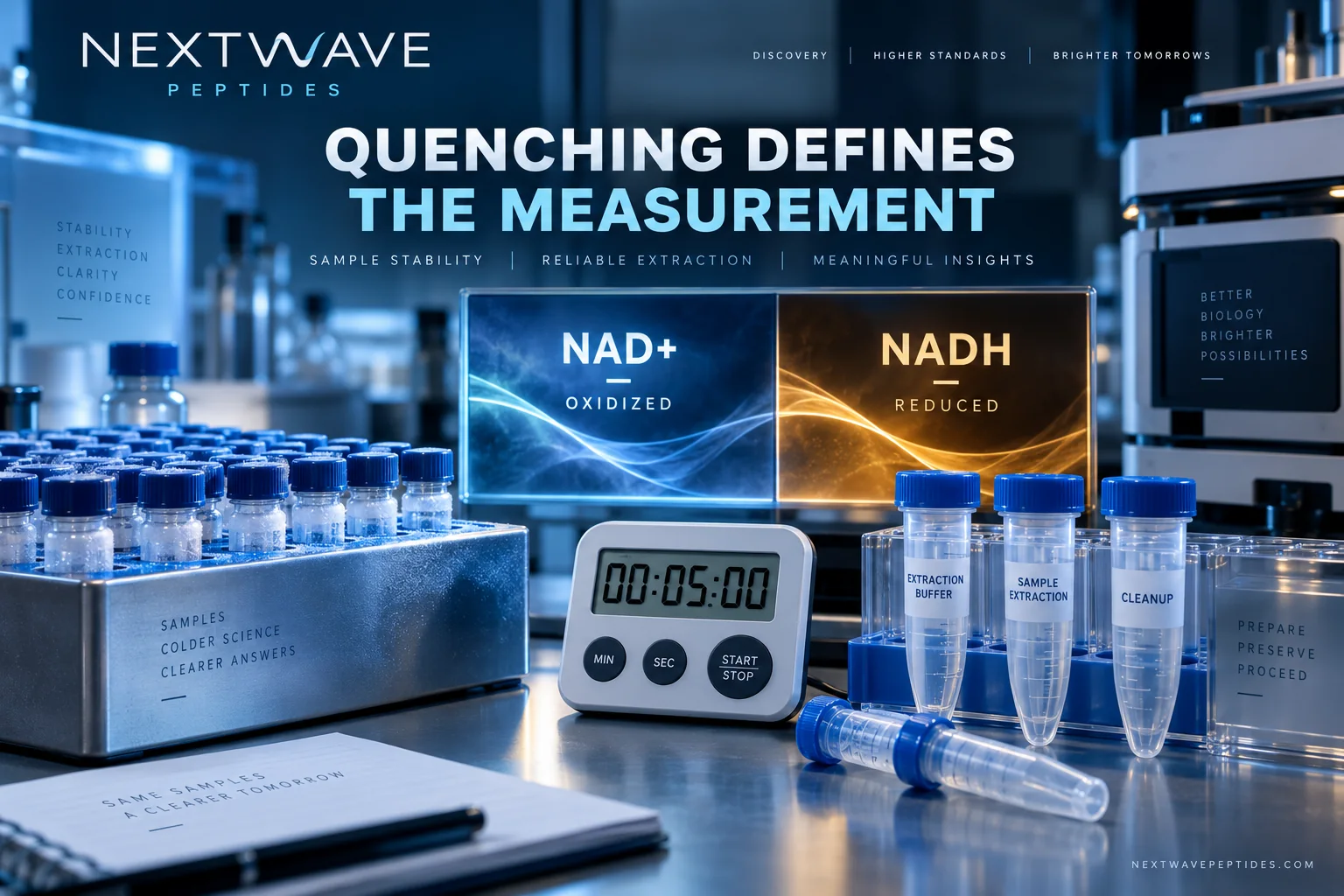
NAD+ vs NADH: Why Quenching and Extraction Define the Redox Measurement
Learn why NAD+ and NADH can change during sample handling and what quenching, extraction, calibration, and normalization a defensible redox result requires.
-
SLU-PP-332 Evidence: What Reporter Assays, Muscle Cells, and Mouse Endurance Each Show
Learn what SLU-PP-332 ERR reporter assays, cultured muscle-cell measurements, genetic controls, and mouse endurance studies each support and limit.
-
KPV and α-MSH(11–13): Why a C-Terminal Fragment Is Not the Full Melanocortin Record
Learn why KPV is the alpha-MSH 11-13 fragment, how parent-fragment identity differs from receptor evidence, and which controls define a KPV study.
-
Bremelanotide vs Melanotan II: Related Scaffolds, Different Research Records
Compare bremelanotide PT-141 with Melanotan II by terminal chemistry, exact mass, fragmentation, receptor evidence, and research-record boundaries.
-
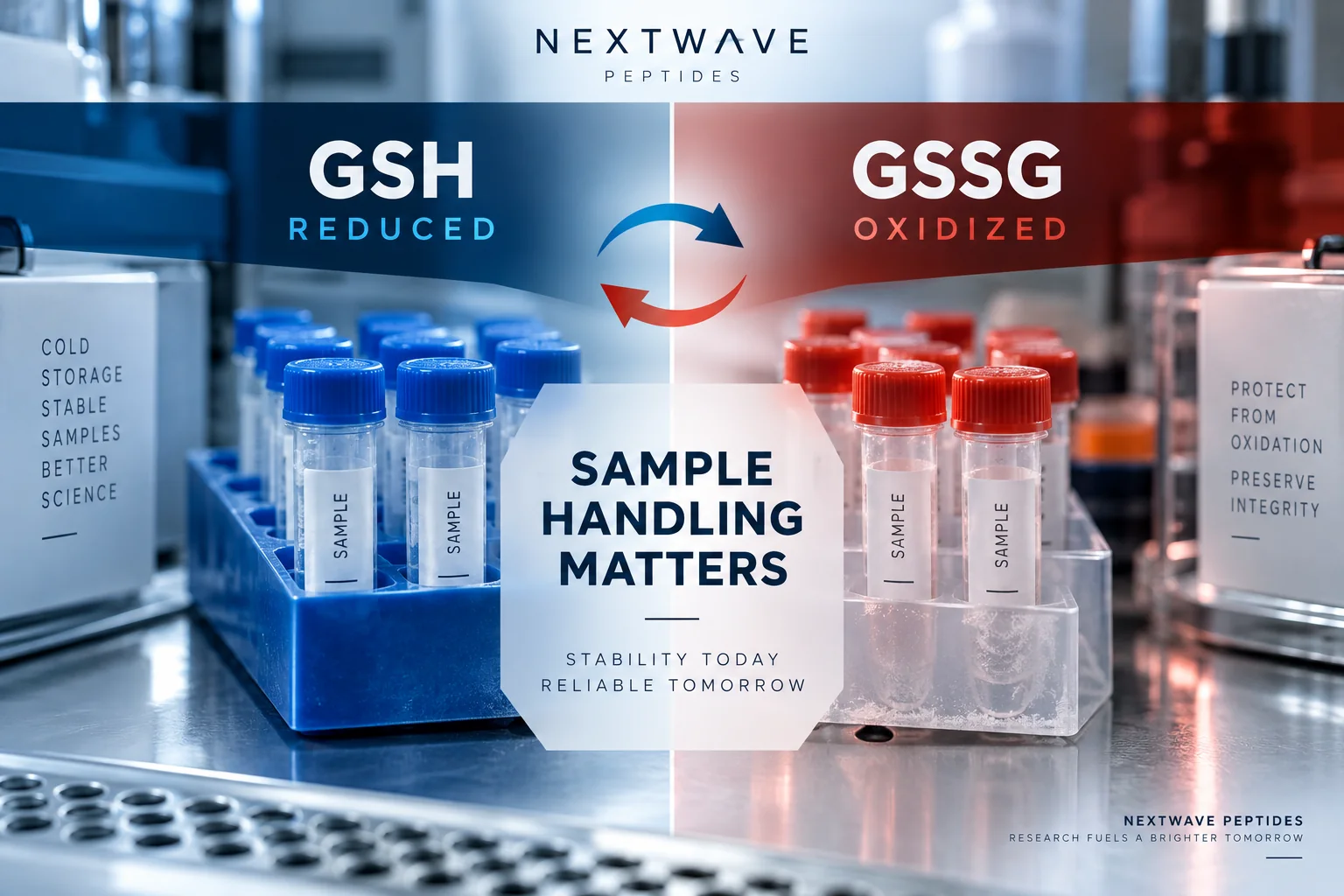
GSH vs GSSG: Why Sample Handling Can Change the Redox Result
Learn why GSH can oxidize during sample preparation, how NEM stabilization affects GSH/GSSG results, and what a defensible redox report should include.
-
HGH 191 Amino Acids: How 22 kDa Somatropin Differs from the 20 kDa Isoform
Learn how 191-amino-acid 22 kDa HGH differs from the natural 20 kDa splice isoform and why intact mass, sequence mapping, and immunoassays answer different questions.