-
 Selank Degradation in Plasma: What the Parent Peptide and Fragments Mean
Learn how intact Selank TKPRPGP differs from TKPRP, TKP, RP, and GP fragments and what radiolabel, chromatography, and LC-MS evidence can establish.
-
Tesamorelin and GH Pulsatility: Which Readouts Actually Changed?
Learn which tesamorelin GH pulsatility measures changed in a frequent-sampling study and why mean GH, pulse area, basal secretion, and IGF-I differ.
-
MOTS-c Nuclear Translocation: What Localization, AMPK Perturbation, and Chromatin Evidence Each Show
Learn how fractionation, microscopy, time courses, AMPK perturbation, chromatin association, and transcription support different MOTS-c localization claims.
-
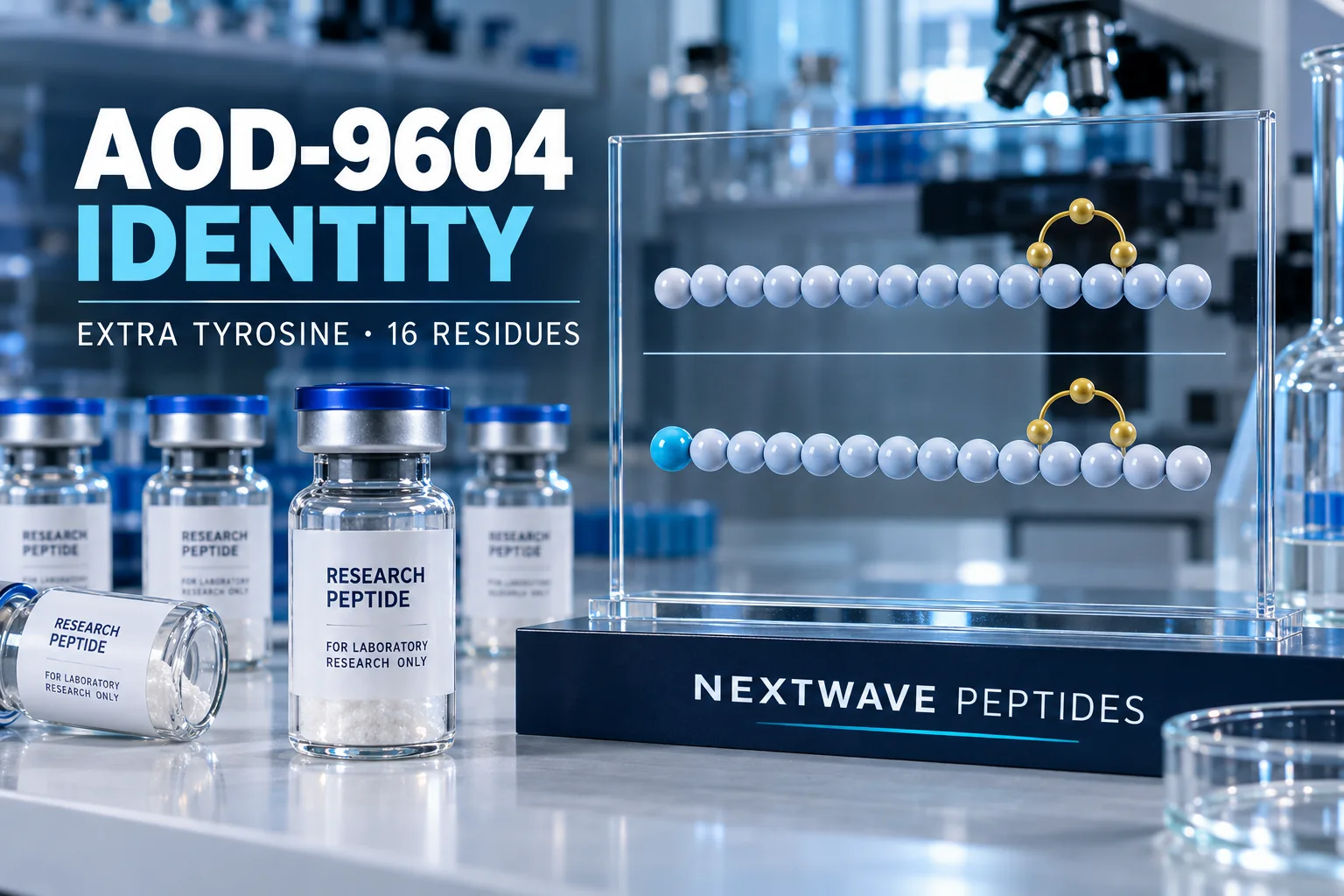
AOD-9604 vs hGH Fragment 177–191: Why the Extra Tyrosine Changes the Identity Record
Learn how AOD-9604 differs from native hGH fragment 177-191 through an added N-terminal tyrosine, residue count, disulfide form, and material record.
-
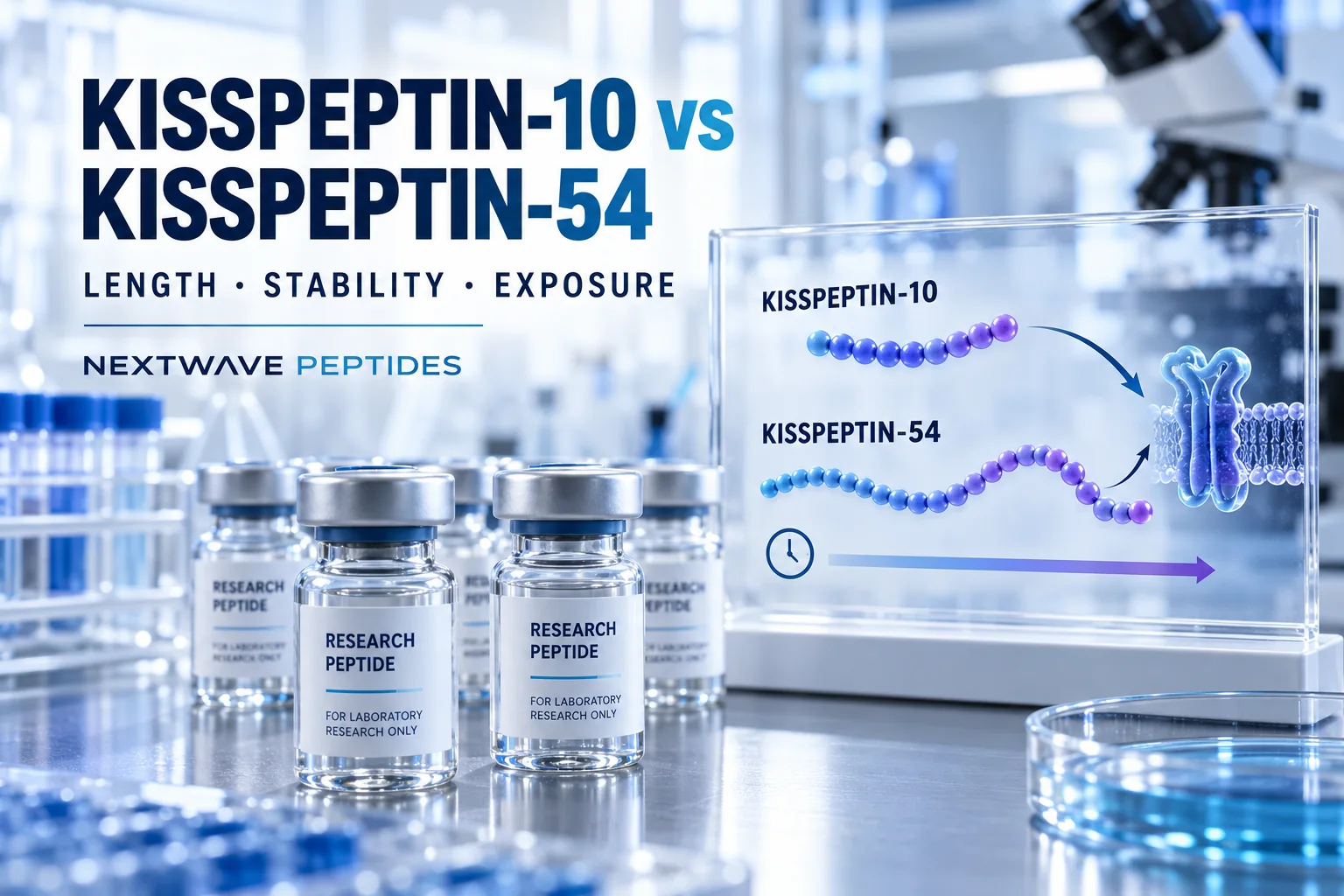
Kisspeptin-10 vs Kisspeptin-54: Why Similar Receptor Affinity Does Not Make the Peptides Interchangeable
Compare KP-10 and KP-54 by molecular length, KISS1R assays, stability, clearance, exposure design, and endpoint timing without treating them as interchangeable.
-
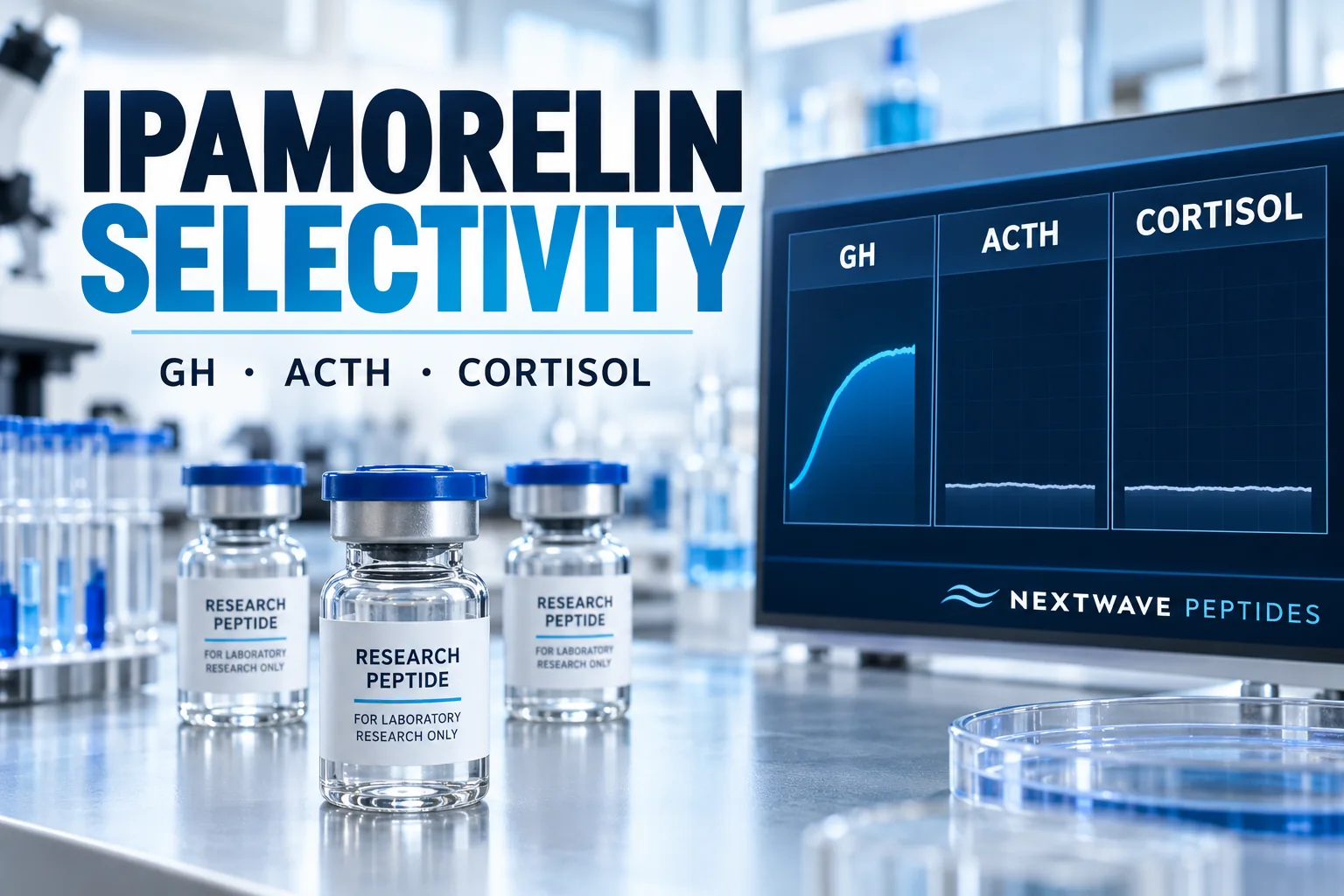
Ipamorelin Selectivity: What Did the Original GH-Release Experiments Actually Show?
Learn what ipamorelin selectivity meant in the original GH-release experiments and why endocrine response, receptor binding, and signaling remain separate claims.
-
CagriSema Evidence: Why Coadministration Results Do Not Validate Every Premixed Peptide Blend
Learn why cagrilintide and semaglutide coadministration studies do not establish the identity, ratio, compatibility, or stability of every premixed research blend.
-
PNC-27 Studies: Why Membrane HDM-2 Evidence Is Different From Total Protein Expression
Learn how total expression, membrane fractionation, colocalization, binding, perturbation, and pore imaging support different PNC-27 claims.
-
Does DSIP Always Increase Sleep? Why Species, Sequence, and EEG Endpoint Change the Answer
Learn why DSIP sleep findings vary with peptide identity, species, baseline condition, route, observation window, and the exact EEG or sleep endpoint.
-
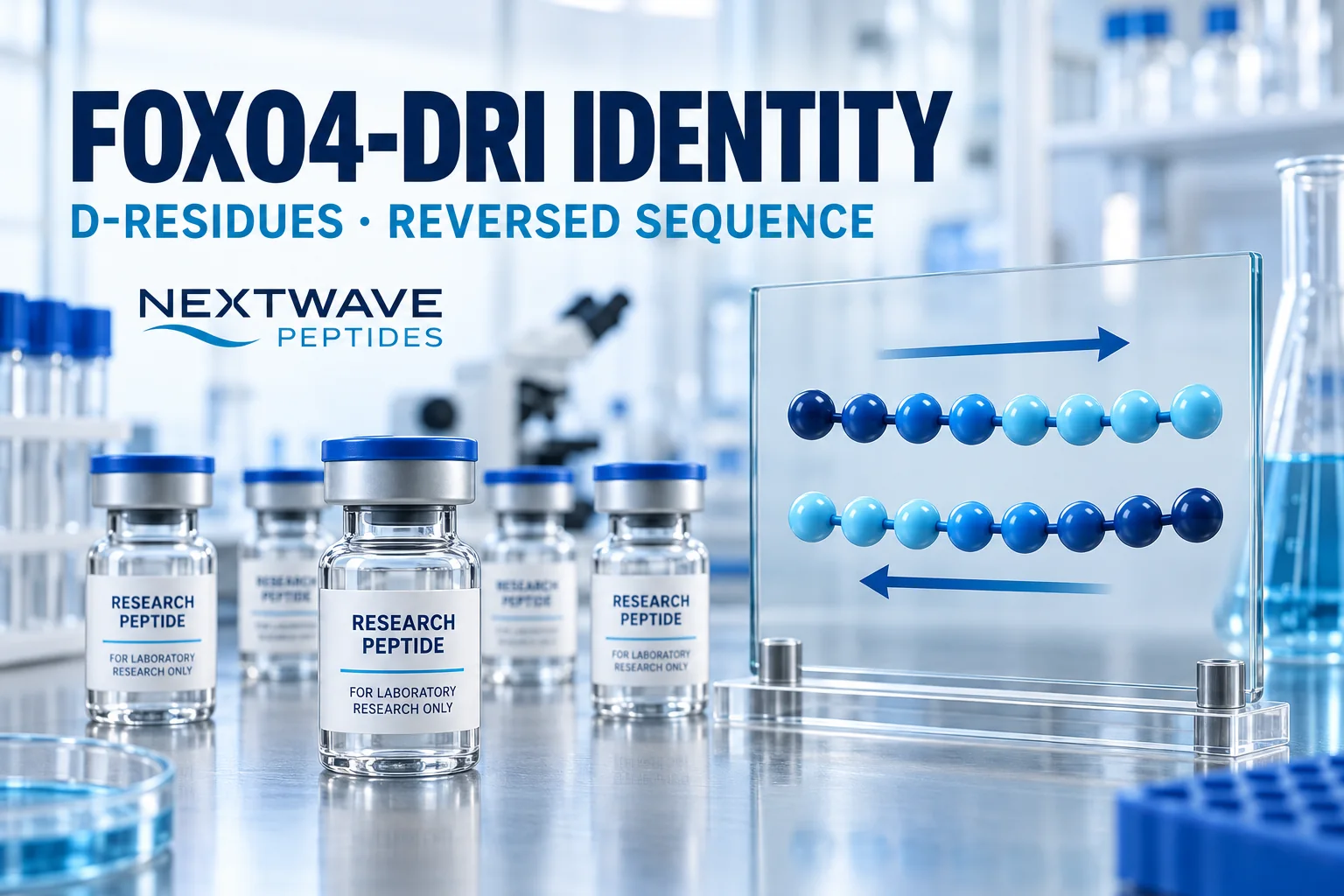
FOXO4-DRI Identity: What “D-Retro-Inverso” Changes in a Peptide Record
Learn how D-residue configuration, reversed sequence order, terminal groups, and construct design define FOXO4-DRI beyond composition or mass alone.
-
VIP Receptor Studies: Why VPAC1, VPAC2, and PAC1 Cannot Be Treated as One Readout
Learn why VIP receptor evidence must identify VPAC1, VPAC2, or PAC1, plus the expression system, ligand, binding method, and signaling endpoint.
-
Semax Stability Studies: Why an Intact Peptide Signal Is Not the Same as a Fragment Profile
Learn why Semax parent-peptide detection, degradation rate, and fragment identification require separate analytical questions and method details.