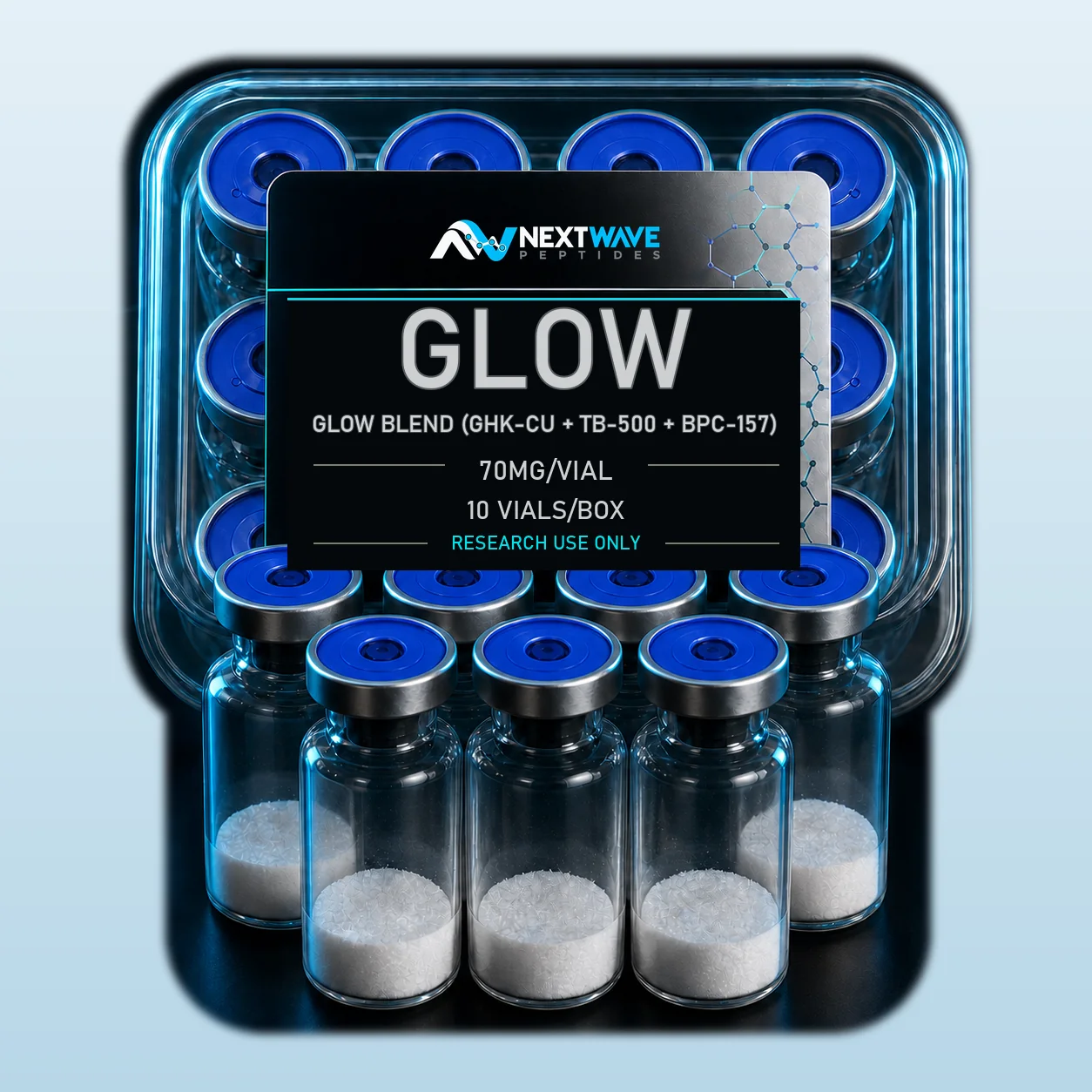
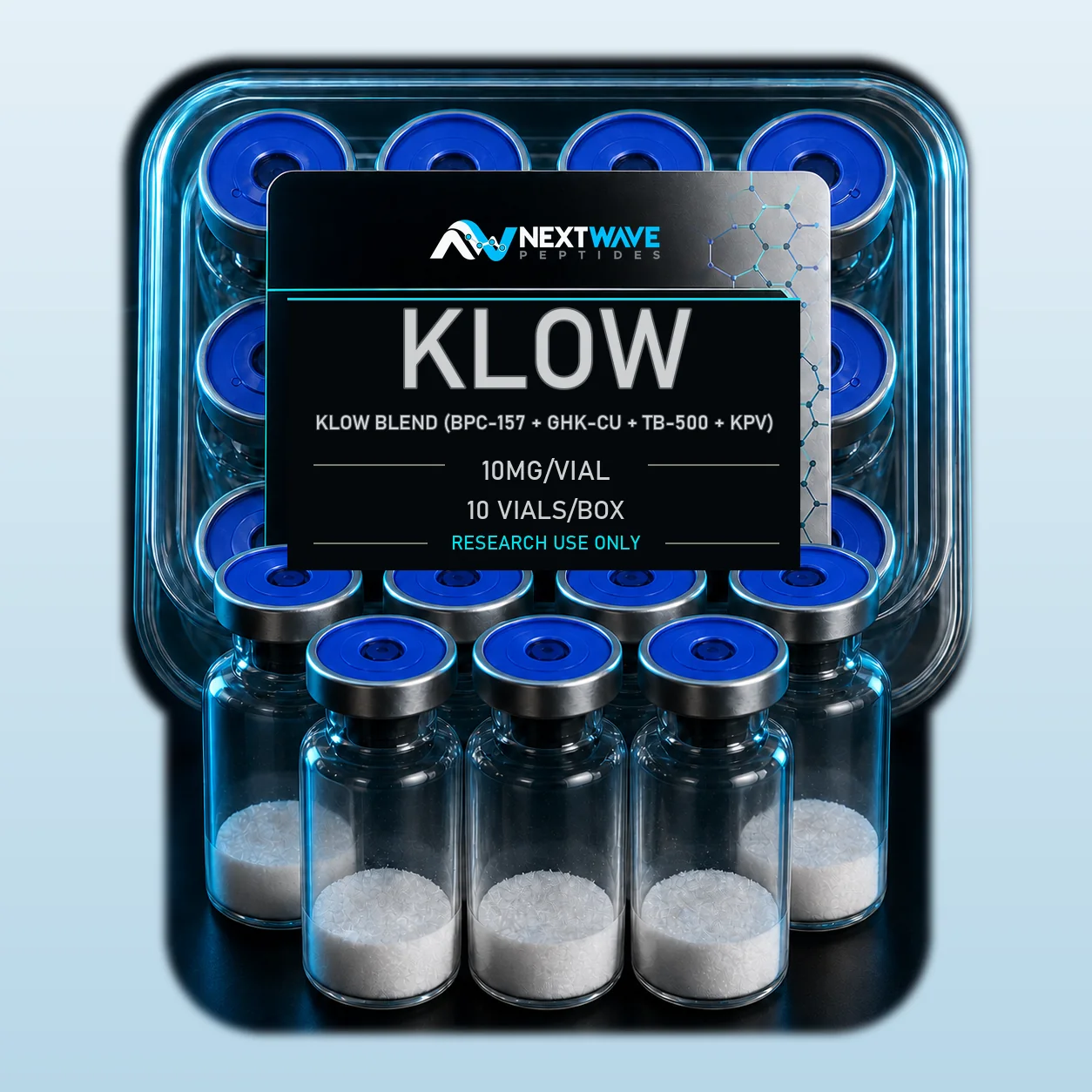
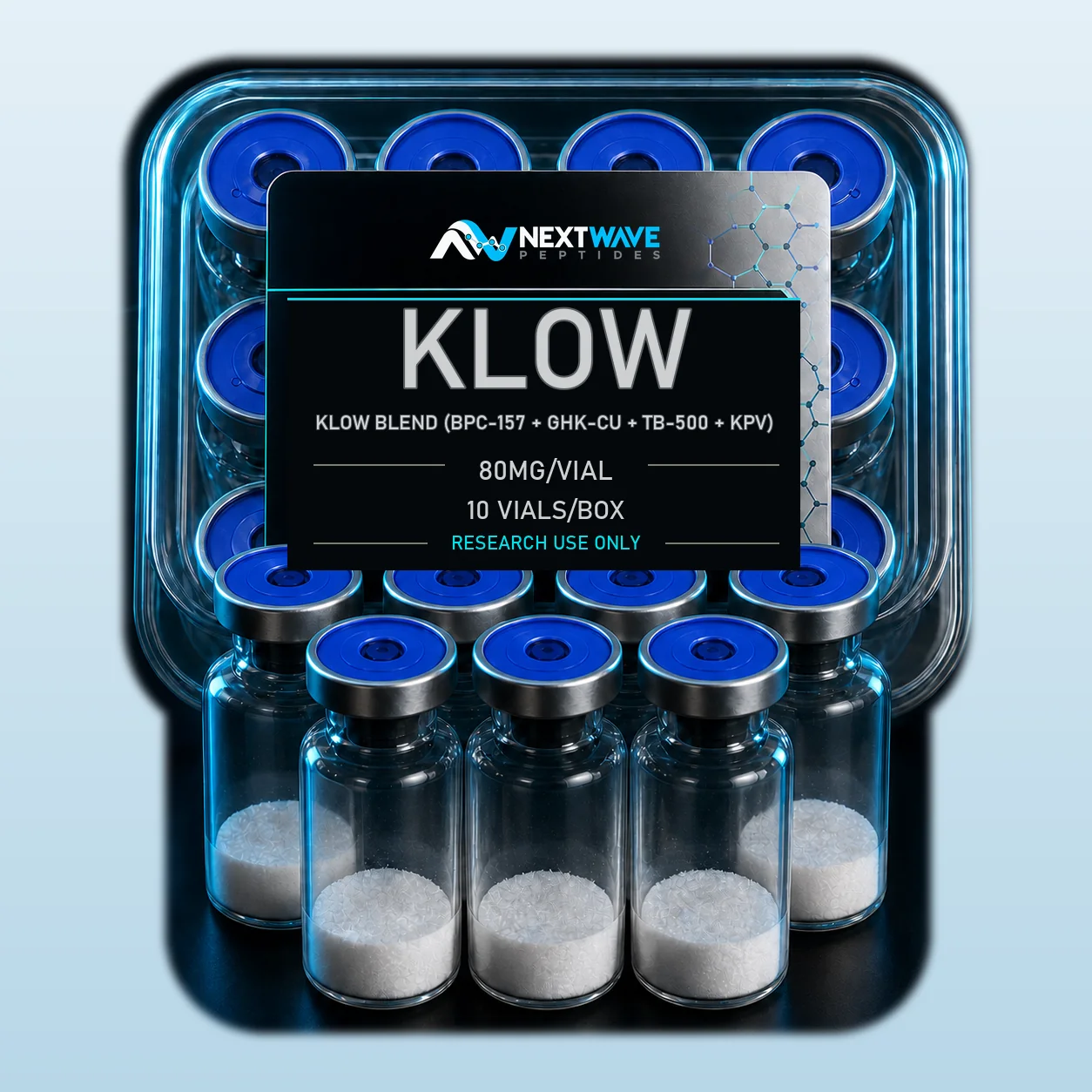
KLOW Blend (BPC-157 + GHK-Cu + TB-500 + KPV)
-
Detail
Product Overview
KLOW Blend (BPC-157 + GHK-Cu + TB-500 + KPV) is supplied as a research material for controlled laboratory investigation of four-component peptide interaction and matrix-response research. Its profile is relevant to experimental designs that compare pathway activity, concentration-dependent responses, and material stability.
Research Areas
- Four-component peptide interaction and matrix-response research
- Cell migration models
- Extracellular-matrix signaling
- Controlled tissue-response assays
Available from our US Warehouse.
Technical Overview
KLOW combines four distinct research materials: BPC-157, GHK-Cu, KPV and TB-500 represented as the thymosin Beta-4 17-23 fragment. The 10 mg and 80 mg labels are total blend amounts and do not state each component's quantity. Confirm the component allocation on the product label or lot record before quantitative comparison.
Available product-record and matched public identity fields are shown; unavailable technical fields are omitted.
KLOW Blend (BPC-157 + GHK-Cu + TB-500 + KPV) Record Notes
How is the COA matched for KLOW Blend (BPC-157 + GHK-Cu + TB-500 + KPV)?
Match the selected strength first, then confirm the batch number, test date and reported result in the opened certificate.
What supports the molecular identifiers on this page?
A single CAS number or molecular formula is not shown when the catalog entry is a blend, formulation, or lacks a reliably matched authoritative compound record.
What controls storage and solvent selection?
Use the lot-specific COA or SDS when it provides those conditions. This page does not apply one universal solubility statement to every material.
Last reviewed: September 14, 2026 · NEXTWAVE PEPTIDES Editorial Team · For laboratory research use only.
NextWave Learn
Related Research & Documentation
Source-led guides selected for this product record. Product identity, published evidence and lot documentation remain separate.
Primary guideKLOW Blend Records: BPC-157, GHK-Cu, TB-500, and KPVRead the guide →Evidence contextPeptide Blends: How to Document Multi-Component Research MaterialsRead the guide →DocumentationBPC-157 and TB-500: Reading Nonclinical Evidence Without OverreachRead the guide →DocumentationHow to Read a Research-Peptide COA: Identity, Purity, Method, and LotRead the guide →Research calculation tool
KLOW Blend (BPC-157 + GHK-Cu + TB-500 + KPV) Calculator Preset
Open the main Peptide Calculator with the listed 10 mg, 80 mg vial strengths for this product. Enter the actual laboratory diluent volume and researcher-defined target amount.
Open KLOW Blend (BPC-157 + GHK-Cu + TB-500 + KPV) in the Peptide Calculator → -
Customer ReviewsNo comments
Research Materials FAQ
Documentation, catalog structure and product-record information for NextWave Peptides products.
-
Where can I review lot documentation?
Use the COA library to review available product- and lot-specific analytical documentation. Availability is shown by the published product and lot record.
-
Why does this product cost less?
NextWave uses 10-vial boxes, direct online pricing and efficient operations to reduce unnecessary markups. Lower pricing does not remove available batch-specific analytical documentation. See how NextWave keeps prices lower.
-
How are selectable strengths and packaging shown?
Each product page presents its available strength selections and published pack configuration in the native product selector. Verify the displayed product record before research use.
-
When are orders dispatched?
Orders are processed and dispatched from our U.S. fulfillment facility within 24 hours. Use Tracking Order for the latest shipment status after fulfillment.
-
Where can I buy this product for laboratory research?
Select an available strength on this product page, review the published specifications and available lot-specific COA, then add the product to your cart. For laboratory research use only. Not for human or veterinary use.
Related Research Materials
Explore additional materials from the same published research collection, then compare product records and available documentation.